
SG Highlights
Week of Feb. 22-26, 2016
Upcoming
- The Sunphotometer-Satellite Group recently received additional support from HQ Earth Science Division to build a second 4STAR (Spectrometers for Sky-Scanning, Sun-Tracking Atmospheric Research) instrument to meet their commitment to participate in three 2016 field campaigns (the Korea US-Air Quality KORUS-AQ, the North Atlantic Aerosols and Marine Ecosystems Study NAAMES, the ObseRvations of Aerosols above Clouds and their intEractionS ORACLES). To meet the goal of an operating instrument with some updated enhancement by early April 2016 they have reached out to organizations within Ames and other NASA Center. The Millennium Engineering and Integration Services at Ames is providing technical support for all engineering documents for 4STAR mechanical fabrication. Goddard Space Flight Center Advanced Manufacturing Branch is fabricating most of the 4STAR mechanical components. Their ability to meet delivery schedule and at the lowest cost met our criteria for their selection. The Airborne Instrument Laboratory in Building N245 is providing support for remaining parts fabrication and final assembly.
- Code SGG researchers will participate in KORUS-AQ, an international cooperative air quality field study in Korea in Spring 2016. The Sunphotomer-Satellite Group lead by Jens Redemann will deploy a 4STAR instrument on the NASA DC-8 to provide observations that will allow better understanding of the factors that control trace gas and aerosol retrievals from space under highly polluted and highly variable surface conditions. Jim Podolske is a co-investigator on the Langley Research Center Diode Laser Hygrometer (DLH) Team that will provide water vapor measurements in the troposphere. KORUS-AQ is managed by Jhony Zavaleta of the Ames Earth Science Project Office (ESPO).

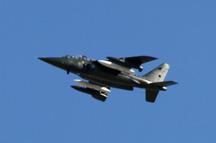
- The Alpha Jet Atmospheric eXperiment (AJAX) Team will have a busy mission schedule in 2016. Among the major missions planned:
* The California Air Resources Board (CARB) sponsored California Baseline Ozone Transport Study (CABOTS): Recent health research has prompted the EPA to propose a new, lower ozone standard, while increasing industrialization in Asia has led to increased baseline ozone concentrations entering the State from the west. CABOTS is designed to investigate the difficult relevant policy questions of the content and daily variability of ozone vertical profiles as they enter the State from the Pacific. Another goal is to determine what extent does trans-Pacific long-range transported ozone mixes down to surface sites in the San Joaquin Valley (SJV). AJAX will make observations off the coast in coordination with ozone sonde launches, and in the SJV during the spring and summer months. CARB recognizes the importance of AJAX airborne measurements.
* NOAA has launched the El Niño Rapid Response Field Campaign to discover how El Niño affects weather and to improve accuracy of weather forecasts and models (http://www.esrl.noaa.gov/psd/news/2016/020516.html). AJAX in collaboration with NOAA and UCSD/Scripps is contributing to this understanding by making observations of meteorological parameters and air quality gases during the cool season (winter/spring) related to extreme weather events along the California coast.
* Vicarious calibration at Railroad Valley, NV for the NASA Orbiting Carbon Observatory-2 (OCO-2) and the JAXA (Japan Aerospace Exploration Agency) Greenhouse gases Observing SATellite (GOSAT) during summer solstice (late June early July). AJAX is the only airborne measurement for this important satellite instrument validation activity.
* NOAA has launched the El Niño Rapid Response Field Campaign to discover how El Niño affects weather and to improve accuracy of weather forecasts and models (http://www.esrl.noaa.gov/psd/news/2016/020516.html). AJAX in collaboration with NOAA and UCSD/Scripps is contributing to this understanding by making observations of meteorological parameters and air quality gases during the cool season (winter/spring) related to extreme weather events along the California coast.
* Vicarious calibration at Railroad Valley, NV for the NASA Orbiting Carbon Observatory-2 (OCO-2) and the JAXA (Japan Aerospace Exploration Agency) Greenhouse gases Observing SATellite (GOSAT) during summer solstice (late June early July). AJAX is the only airborne measurement for this important satellite instrument validation activity.
New Publications:
- Christopher Potter has published a new paper in the Journal of Biodiversity Management and Forestry titled “Vegetation Cover Change in Glacier National Park Detected using 25 Years of Landsat Satellite Image Analysis”. Landsat image comparisons between the years 1984 and 2010 showed that consistent increases in the normalized difference vegetation index (NDVI) wereobserved at several treeline areas, some of which have been monitored for increased tree cover in historical photographs for more than 75 years. The period of most rapid increase in alpine zone NDVI was generally observed between 1984 and 1994, followed by a slower rate of increase between 1994 and 2010. In sub-alpine zones of GNP, Landsat NDVI analysis did not detect an upward elevation shift in (unburned) canopy green cover over the past 25 years. Recent increases in minimum summer temperatures and declines in early spring snow water equivalent (SWE) in the northern Rocky Mountains were linked to changes in NDVI.
Meetings and conferences:
- As the NASA representative on the Great Basin Research and Management Partnership Executive Committee (GBRMP), Dave Bubenheim attended its Sagebrush Conference, Feb. 23-24. The GBRMP executive committee just signed a new MOU with the other federal and state agencies that participate. This Sagebrush Conference included meetings with other organizations such as DOI’s Great Basin Landscape Conservation Cooperative. The conference is a meeting place for the exchange of science and formation of community consensus regarding research and application directions. In addition to conference attendance, Bubenheim met with reps from USDA ARS and NRCS and BLM Feb. 25-26, at Utah State University, regarding Great Basin priorities.
- Jens Redemann is participating in the NASA CALIPSO CloudSat science team meeting, Newport News, VA, Feb. 29-Mar. 4, 2016.
- Jens Redemann will participate in the Atmospheric Radiation Science Workshop, Boulder, CO, Mar. 8-11, 2016.
- Laura Iraci and Jim Podolske will participate in the Orbiting Carbon Observatory-2 Science Team Meeting, Pasadena, CA Mar. 21-23, 2016.
- Jens Redemann and Michal Segal-Rosenheimer (BAER) will participate at the International Radiation Symposium 2016, Auckland, New Zealand, Apr. 16-22, 2016:
- Jens Redemann, “Aerosol-radiation-cloud interactions in the South-East Atlantic: Future suborbital activities to address knowledge gaps in satellite and model assessments”
- Michal Segal-Rosenheimer, “Relative roles of atmospheric state and boundary layer clouds on Arctic cloud radiative forcing forecasts: The ARISE 2014 case study”
- Michal Segal-Rosenheimer, “Relative roles of atmospheric state and boundary layer clouds on Arctic cloud radiative forcing forecasts: The ARISE 2014 case study”
Code SGG members will participate at the European Geophysical Union conference, Vienna, Austria, Apr. 17-22, 2016.
- Eric Jensen, “On the importance of high frequency gravity waves for ice nucleation in the tropical tropopause layer”
- Josette Marrero, “Airborne in-situ measurements of formaldehyde over California: First results from the COFFEE instrument”
- Ju-Mee Ryoo, “New approach to characterize CO2 and CH4 emissions over Sacramento, California using an airborne aircraft measurement”
- Code SGG members will participate in the 2016 SPARC Gravity Wave Symposium, Penn State University, State College, PA, May 16-20, 2016.
- Eric Jensen, “The influence of atmospheric waves on cirrus cloud occurrence and microphysical properties” (Invited oral)
- Leonhard Pfister, “Small scale motions observed by aircraft in the Tropical Tropopause Layer – Convective and non-convective environments” (Poster)
- Code SGG members will participate in the ORACLES Science Team Meeting, Ames Research Center, Moffett Field, CA, Jun. 21-23, 2016.
- Eric Jensen will make a presentation at the XVII International Conference on Clouds & Precipitation, Manchester, UK, Jul. 25-29, 2016.
Press
- A film crew from RAW Science visited Ames on Feb. 22 to produce a short piece about Diana Gentry and her team's work on experimental evolution of microbes in changing environments.