




















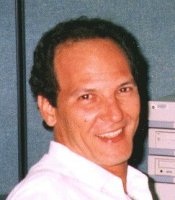
Roberto Barrera, Ph.D.
Affiliation
Laboratorio de Biologia de VectoresInstituto de Zoologia Tropical
Facultad de Ciencias
Universidad Central de Venezuela
Caracas, Venezuela
Project and Training Dates
Venezuelan equine encephalitis in the Catatumbo Area and malaria in eastern VenezuelaJuly - August 1997
Research Objectives Pursued during CHAART Visit
The purpose of the project is to use Landsat TM images to understand how landscape is related to vector ecology and disease transmission in studies of malaria in Venezuela and the emergence of Venezuelan equine encephalitis (VEE). The VEE project has two images of the Catatumbo area (1986 and 1996) that can be used to determine where deforestation has taken place. Forest cover is an important aspect of this research because the information may be used to locate potential sites of virus transmission, and, consequently, to identify priority areas for equine vaccination in order to prevent eventual epizootics. The geographic area of the malaria study is located in an eastern portion of the Venezuela TM scene. The focus of the analysis is on mapping mangrove and other land covers associated with malaria transmission in the area.Acomplishments
The first part of the training concentrated on learning to use image processing software. Image classification and rectification were emphasized. A better understanding of spheroids, datums, and map projections was obtained during the rectification process. The work provided him with a better idea of how to proceed with the research project in terms of image processing.The second part of the training also focused on image classification using a subscene of the TM data. A cloud-masking technique was also used. The process was less problematic than with the full scene because Dr. Barrera had ground GPS points and detailed (1:5000 scale) maps of the area, as well as cartographic features in a GIS and information regarding malaria cases and larval habitats. Mangrove forest was identified and red and black mangroves were distinguished in the classification procedure. This differentiation was important because the project has previously shown that the main mosquito vector, Anopheles aquasalis, is mainly associated with black mangroves. The classification process resulted in 11 classes that were then statistically analyzed along with the health data. Related training involved using ArcInfo routines, such as buffering. A DEM was built to determine slope and aspect from contour lines previously digitized by Dr. Barrera.
Other types of image data, such as AVHRR, and literature concerning malaria, GIS, and remote sensing were also reviewed during the visit.