




















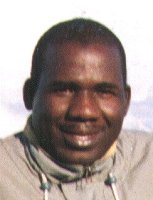
Magaran M. Bagayoko, Ph.D.
Affiliation
Malaria Research and Training CenterUniversity of Mali
Bamako, Mali
Project and Training Dates
Remote Sensing and Monitoring Malaria Risk Factors in MaliOctober - November 1997
Objectives
Receive training in RS/GIS concepts and data processing. These skills can be used to develop a large-scale survey of the mosquito larval ecology in the "office du Niger" and perhaps all of Mali as part of the Malaria Control Program.A longitudinal study on the impact of rice cultivation on malaria risk factors is being carried out in the" office du Niger," which is the biggest rice field scheme in Mali. It is irrigated from a dam on the Niger River. Several studies using in situ data have established that irrigated rice cultivation results in an increase of malaria transmission. However, few of them have underlined the specific land use pattern (e.g., rice vegetation aspects, space coverage by rice plants) that promote mosquito development. The RS/GIS work will employ the landscape epidemiological approach to the study of malaria transmission and rice cultivation in Mali.
Accomplishments during Visit
The two month training focused on learning the remote sensing concepts, image processing, and readings and discussions with CHAART staff on the use of RS/GIS in ecological and epidemiological studies.A raw Landsat TM image that included the Niono area in Mali was used in an image rectification exercise. GCPs were obtained from a paper map at 1:200k of the same area. After completing the process, it was concluded that a better map is needed to improve the rectification. An unsupervised classification using the ISODATA clustering method was performed on these TM data. The information classes extracted were: rice fields, water, wet soil, dry soil, and other crops.
A supervised classification was performed on a Landsat TM scene of the Central Valley in California. This exercise involved a field trip to the area to locate and verify different cover types in the imagery, which could be used as training sites in the classification process. The following information classes that were identified included row crops, orchard, forage crops, wet soil, dry soil, water, and grassland.
Spatial analysis of mosquito density data for the village of Bancoumono was discussed. The proximity of each compound from a breeding site was measured using Arc/Info functions.